Walnut Street Bridge
The 1890 truss bridge, now pedestrian-only, that ties the neighborhood to downtown.
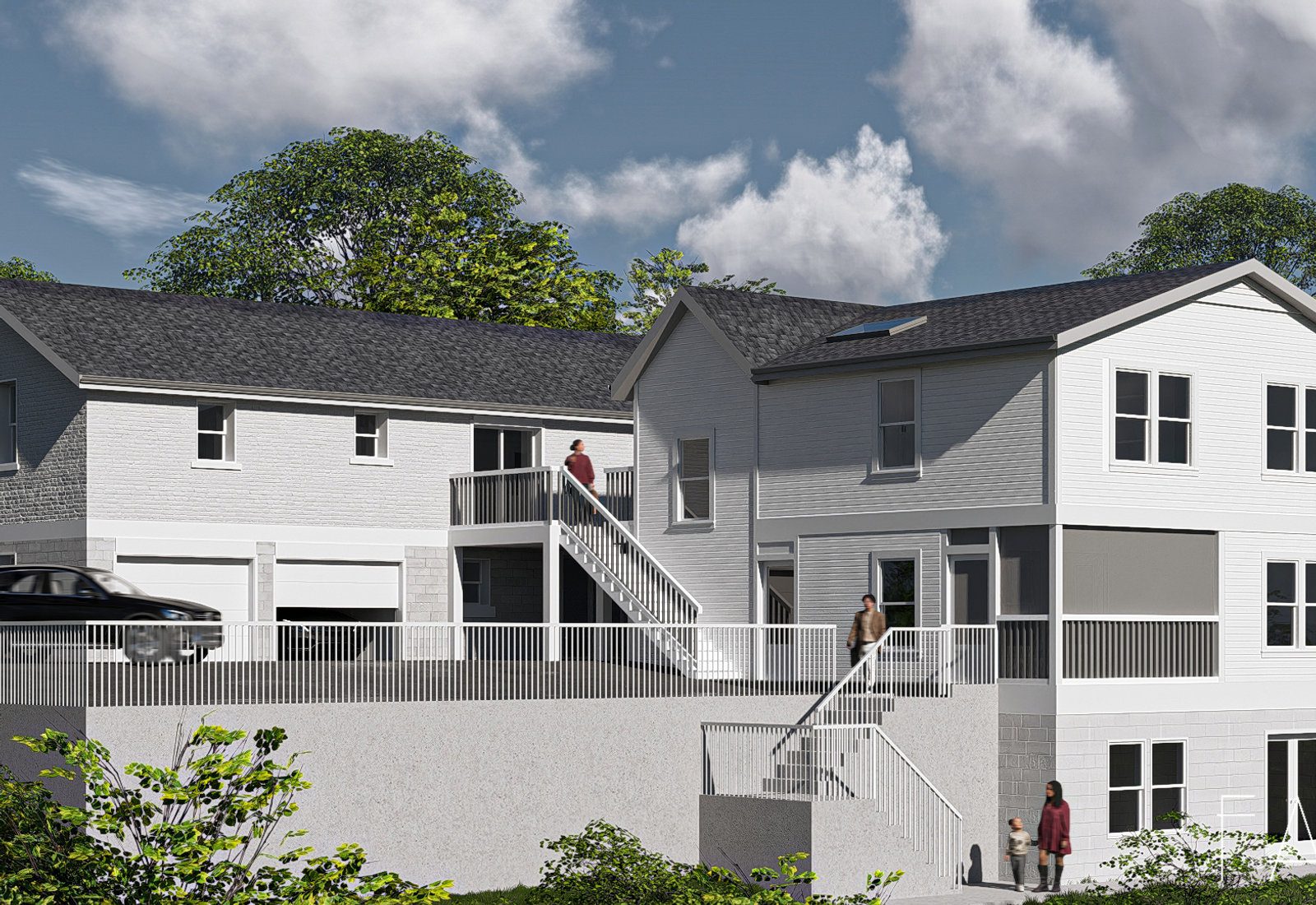
North Chattanooga — the old town of Hill City, marketed today as the Northshore — is a walkable riverfront neighborhood of Queen Anne cottages, foursquares, and Craftsman bungalows on tight urban lots. Most work here is about fitting a modern addition behind a street-facing historic house without losing the porch line.
The area was platted in the 1880s and 90s as the separate town of Hill City on the north bank of the Tennessee River, opposite downtown Chattanooga, and was later annexed into the city.
The 1890 Walnut Street Bridge and the mule-car and streetcar lines that crossed it made Hill City one of Chattanooga's first commuter suburbs; the neighborhood's grid and lot widths still reflect a pre-automobile street pattern.
Build-out ran from the 1880s into the 1920s, producing Queen Anne and gabled-ell cottages, American Foursquares, and Craftsman bungalows, with larger high-style houses on Forest Avenue and along the bluff toward Cherokee Boulevard.
After decades as a working-class riverfront district, the Frazier Avenue corridor was redeveloped through the 1990s and 2000s and rebranded as the Northshore, which reset property values and brought a wave of renovation and rear additions.
The 1890 truss bridge, now pedestrian-only, that ties the neighborhood to downtown.
Riverfront park with the restored carousel, splash fountain, and the neighborhood's festival lawn.
Green stormwater park built on a former industrial site at the bridge approach.
Wooded ridge and trail network rising directly behind the neighborhood.
The historic Hill City main street and the spine of today's Northshore district.
Boutiques, galleries, coffee, and dining within walking distance of most of the neighborhood.
Secondary commercial frontage running north from the bridge.
Neighborhood-scale services along the residential parkway toward the river bluff.
These are the base districts and overlays we see most often on North Chattanooga lots. Always confirm your parcel's district and overlays on the Metro zoning map before design decisions get expensive.
The typical fit for Hill City's compact historic lots: 5,000 sq ft minimum, 50 ft width or the blockface average, 15 ft front (or the average if less), 5 ft interior sides, 25 ft rear, 35 ft height, 60% building coverage.
Applies on blocks where duplexes and townhouses sit alongside houses — 5,000 sq ft for a single unit, 5,500 sq ft for a two-unit, 15 ft front, 25 ft rear.
Frazier Avenue and Market Street carry commercial and mixed-use zoning rather than RN — confirm the district if your property fronts either street.
Parts of the Northshore are recognized for their historic character, but National Register status alone carries no restriction on private exterior work.
North Chattanooga was not among the neighborhoods with published city Historic District Guidelines (St. Elmo, Fort Wood, and Ferger Place have them). Confirm your parcel's status with the city's historic planning staff before assuming either way.
Tennessee River frontage puts low-lying lots in mapped flood hazard areas, which set lowest-floor elevation and can trigger substantial-improvement rules on a big remodel.
Lots climbing toward Stringer's Ridge fall under the city's 2021 steep-slope rules, which add grading, disturbance, and drainage requirements.
Chattanooga's most walkable residential district and the pedestrian gateway to downtown across the Walnut Street Bridge.
One of the city's best-preserved streetcar-era neighborhoods, with an intact 1880s–1920s housing stock.
The Northshore retail corridor makes it a citywide destination, which sustains both property values and renovation activity.
The park hosts citywide events, markets, and outdoor concerts through the warm months.
Frazier Avenue merchants run a recurring evening market along the corridor.
The riverwalk and Coolidge Park landings host regular running and paddling events.
Tell us about your lot and what you're hoping to do. We'll write back within one business day.